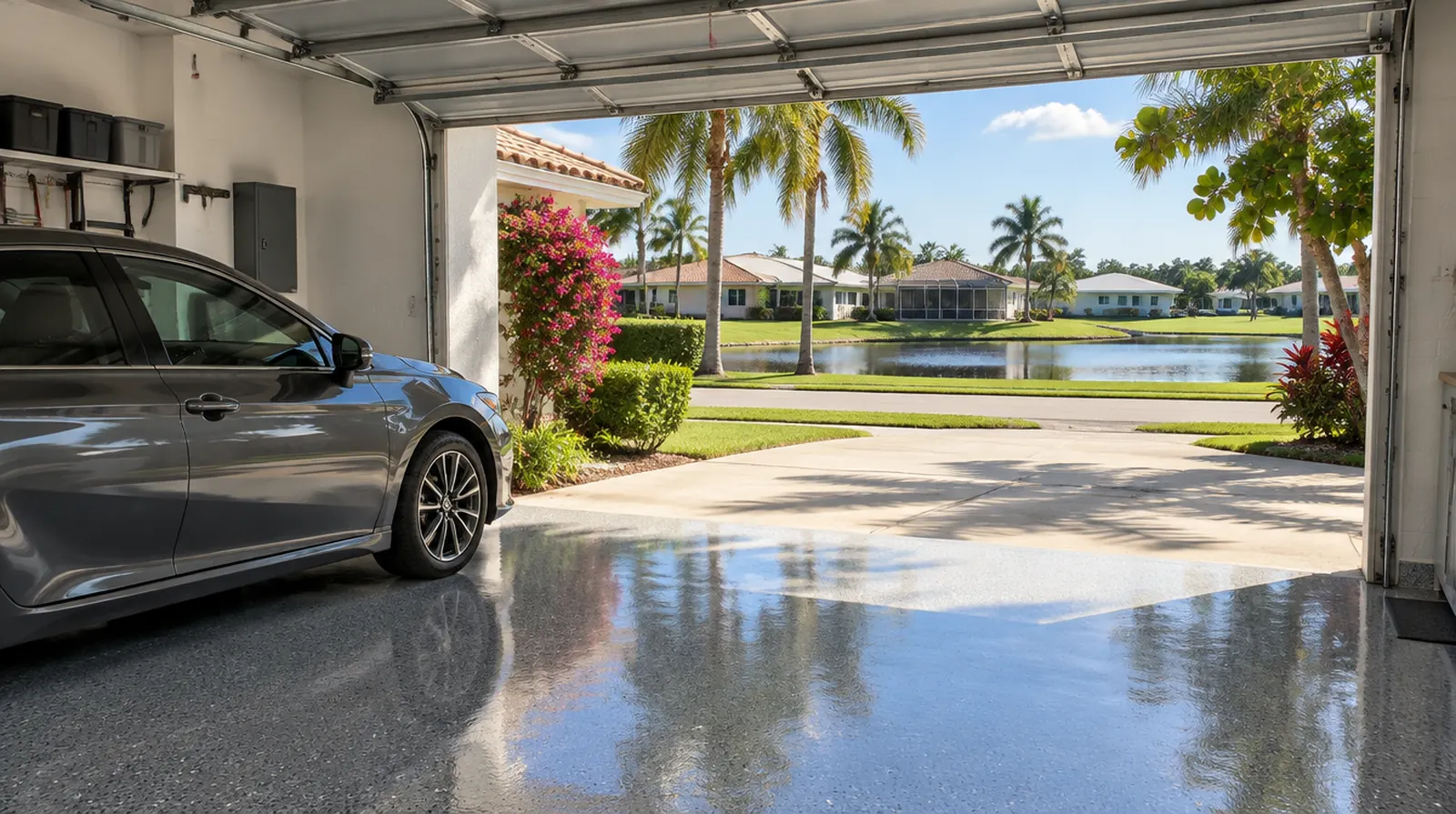
What polyaspartic is
Polyaspartic is a type of polyurea coating that cures much faster than traditional epoxy. It goes on thin, bonds strongly and hardens in hours instead of days. It also resists ultraviolet light, so it stays clear and does not turn yellow in the sun. For homeowners who cannot do without the garage for long, or for patios and lanais that sit in direct sunlight, it is often the best choice.
A one-day garage
Most of our polyaspartic garages are finished in a single day. We arrive early, move through grinding and crack repair in the morning, then apply the base coat, flakes and topcoat in the afternoon. By evening the floor is ready for light foot traffic. Cars can usually return within about a day, depending on temperature and the specific product. Compare that to a full epoxy system, where drive-on time is often three days.
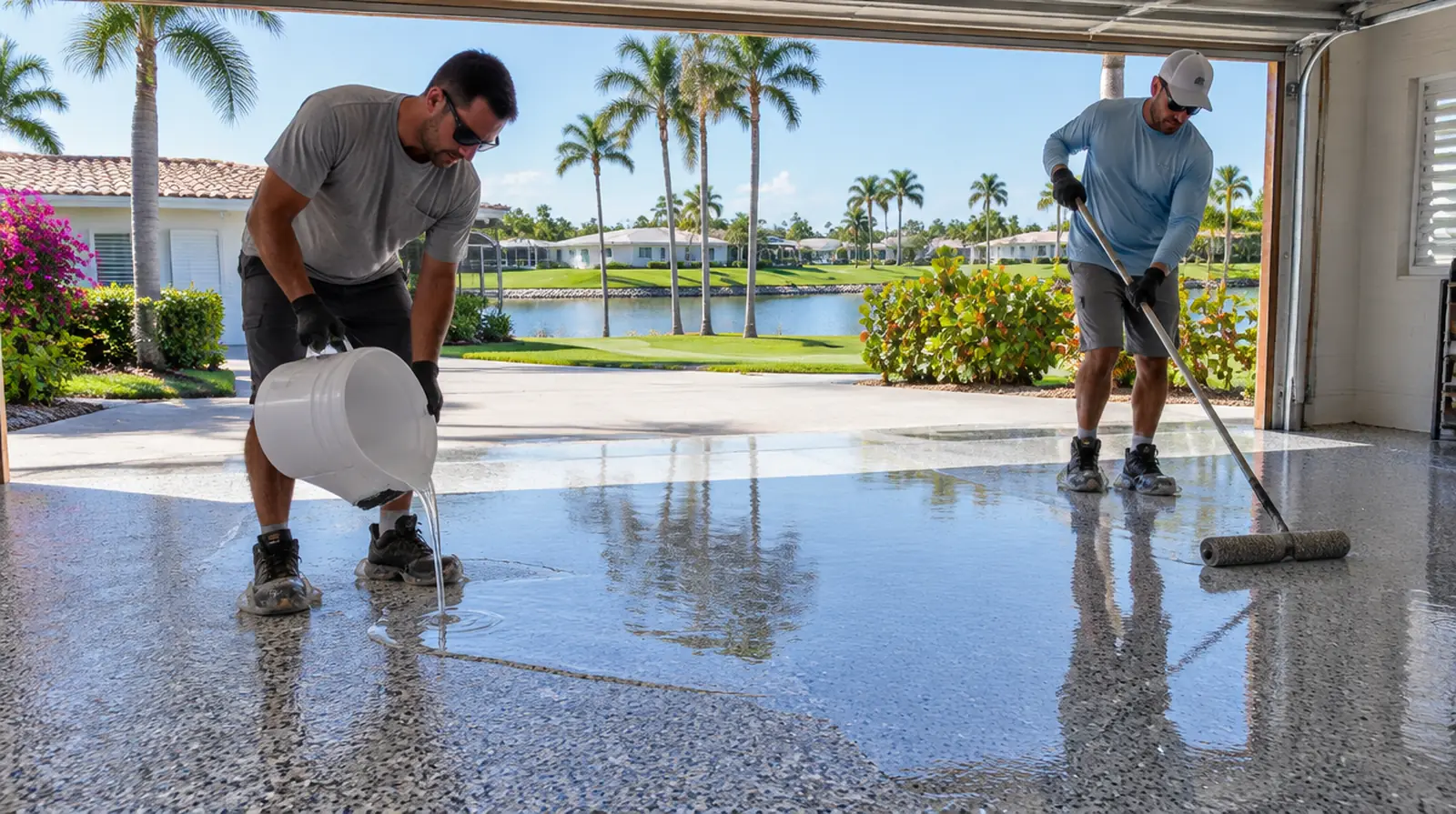
The speed comes with a tradeoff: polyaspartic sets quickly, so it takes an experienced crew to apply it evenly. We work in small sections with two installers, one mixing and spreading and one rolling, so there are no lap marks or puddles.
Preparation still comes first
A fast coating is not a shortcut on preparation. Every polyaspartic floor gets full diamond grinding with dust collection, crack filling and moisture testing. If the slab carries high moisture, which is common in older homes here, we put down a moisture-tolerant epoxy primer first and finish with polyaspartic layers on top. That hybrid approach gives you the vapor protection of epoxy with the speed and UV stability of polyaspartic.
Why sun resistance matters here
Strong sun reaches deep into a garage when the door is open, and it bakes screened patios all afternoon. Standard epoxy yellows and chalks when exposed to that light. Polyaspartic keeps its color and gloss, which is why we use it as the topcoat on almost every floor that sees daylight, even when the base layers are epoxy.
Finishes available
- Flake: the most popular choice, with full-broadcast chips under a clear coat.
- Solid color: a clean, uniform look in grays, tans or whites.
- Clear sealer: for decorative or stained concrete you want to protect without hiding.
Heat and humidity during install
Polyaspartic cures even faster in warm, humid air, which describes most of the year here. We plan installs for early hours in summer, keep materials cool and mix smaller batches so each section goes down smoothly. In cooler months the working time is a little longer, which makes scheduling easier.
Durability
Polyaspartic is hard, flexible and resistant to abrasion, oil, gasoline and most household chemicals. It handles hot tires well and does not soften in summer heat. It is a strong choice for garages, lanais, pool cabanas and small commercial spaces like salons and storage rooms.
Odor and ventilation
Polyaspartic materials have a noticeable odor during application. We ventilate the space, keep doors into the home closed and recommend that anyone sensitive to smells step out during the topcoat. The odor fades quickly as the coating cures.
Questions
Is polyaspartic more expensive than epoxy?
Materials cost more, but the shorter install often balances that out. We quote both options so you can compare.
Can it go on a patio outside?
Yes. It is one of the few coatings that holds color in full sun. We add texture for footing when wet.
How soon can I move things back?
Usually the next morning for boxes and shelves, and a little later for vehicles.
Get your garage back fast
Contact us to book a visit, or see our garage floor epoxy page for a traditional system.
Get a polyaspartic quote
Call (954) 280-5619 for a free estimate.