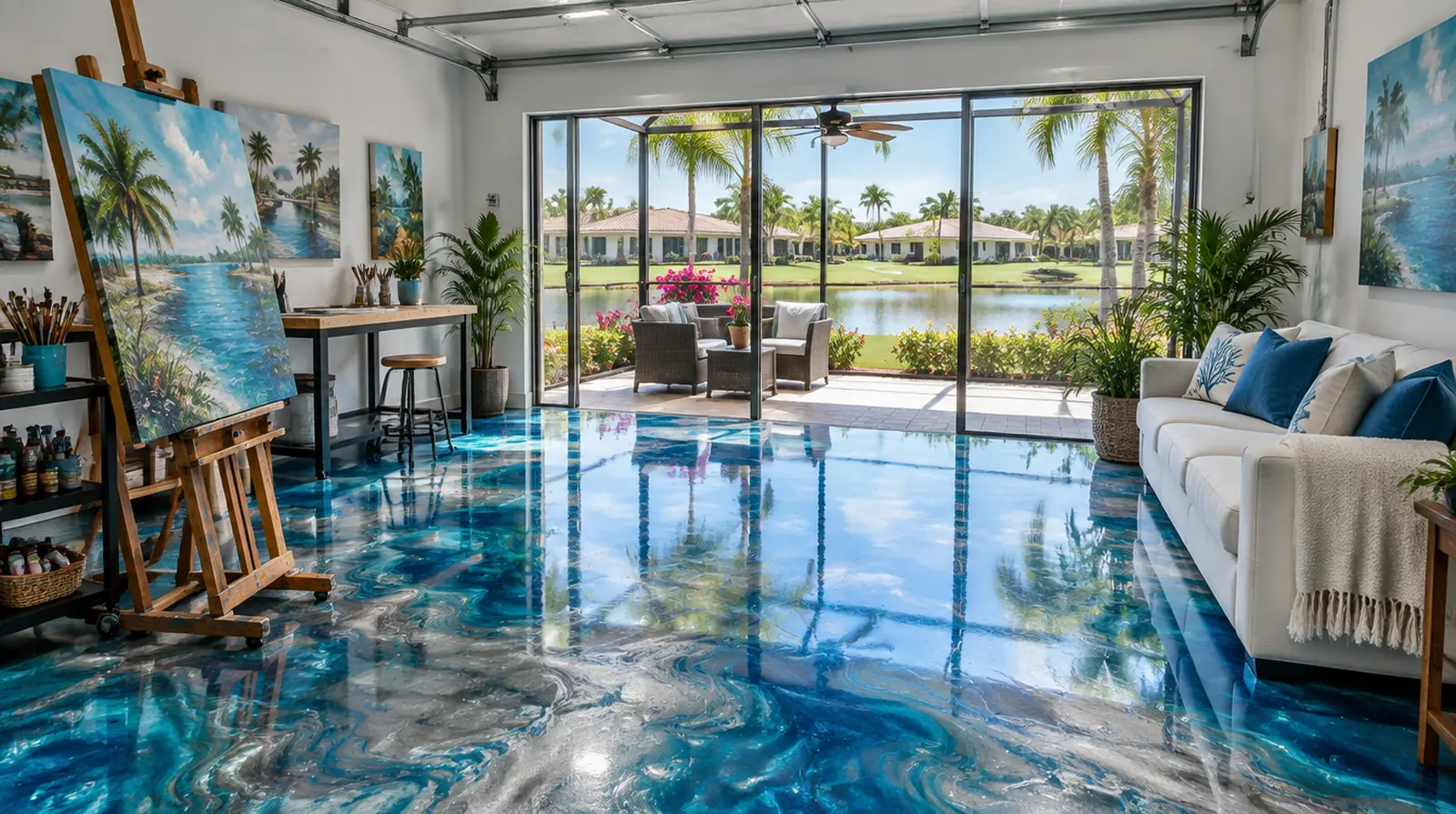
What makes a floor metallic
Metallic epoxy uses fine pearlescent pigments mixed into a clear or tinted resin. As the material is spread and worked, the pigments move and settle at different angles, catching light in ripples, clouds and veins. The look can be soft and marbled or bold and almost liquid. Because every installer moves the material a little differently, each floor is one of a kind.
Here, metallic floors show up most often in garages that have been turned into studios, home gyms, game rooms or guest suites, and in salons, boutiques and small showrooms in the shopping plazas along the main roads.
Preparation matters even more
A metallic finish is glossy and reflective, which means it shows every flaw underneath. Before any color goes down, we grind the slab flat, fill cracks and pits, and skim low spots so the surface is smooth. Old tile adhesive and carpet glue, which we often find in converted rooms, are ground away completely. If the slab tests high for moisture, a vapor-tolerant primer goes on first. Skipping these steps leads to bumps, haze or bubbling that cannot be fixed without starting over.
How we build the finish
Primer and base
A penetrating primer bonds to the concrete, followed by a solid color base, usually black, white or a deep gray. The base color changes how the metallic layer reads, so we choose it together.
Metallic layer
The metallic resin is poured and moved with rollers, trowels and sometimes air blowers or solvent sprays to create cells and veins. This stage is where the design comes to life, and we follow the plan you approved on sample boards.
Clear topcoat
A clear urethane or polyaspartic topcoat adds scratch resistance and keeps the floor from yellowing where sunlight comes through windows and patio doors.
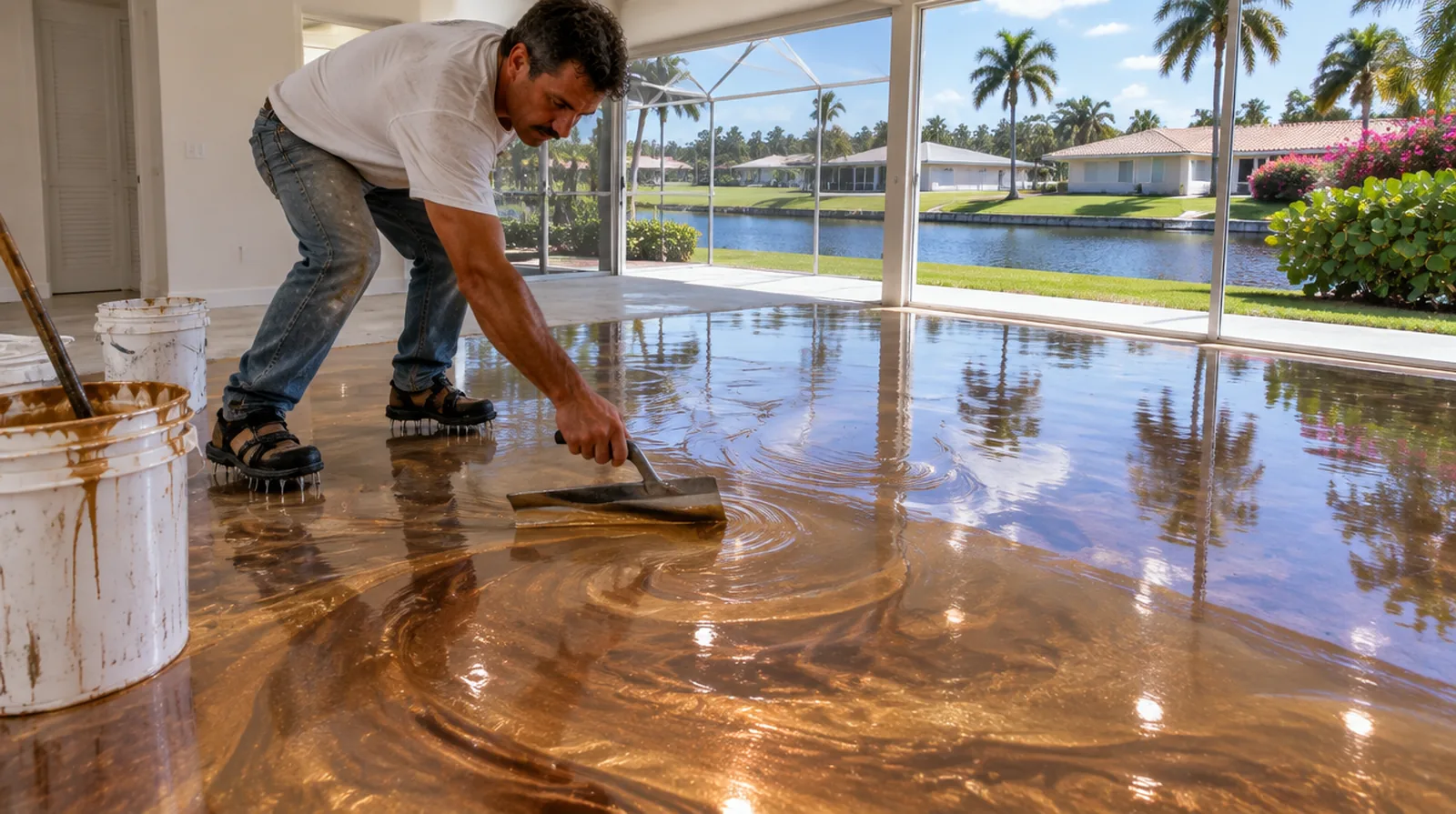
Choosing colors
Coastal blues and silvers are a favorite here, pairing with white walls and tropical décor. Copper and bronze look warm in game rooms and bars. Charcoal with silver veining reads modern in an office or salon. Light enters many homes through big sliding doors, and metallic pigments look very different in morning sun and evening lamplight, so we bring large samples and check them at different times if you like.
Where metallic works best
Metallic floors are best for interiors with moderate traffic and controlled conditions: studios, offices, retail spaces, living areas and home gyms. They can go in a working garage, but the gloss shows tire marks and dust more readily than a flake floor. For a garage that still holds cars, we often suggest flake in the parking area and metallic in a finished corner or adjoining room.
Slip resistance
A glossy floor can feel slick when wet. We add a fine clear grit to the topcoat in entryways, kitchens and bathrooms. It barely changes the look but noticeably improves footing.
Timeline
Metallic floors take a bit longer than standard coatings because each layer needs to cure before the next. A typical room or single garage takes two to three days. Light foot traffic is fine about a day after the topcoat, and furniture can return a day or two after that. Felt pads under chair and table legs protect the finish.
Care
Dust mop daily in busy rooms and damp mop with a neutral cleaner. Avoid harsh chemicals and abrasive pads. Area rugs should have breathable backing. A maintenance coat every few years in high-traffic areas keeps the gloss fresh.
Questions
Can you match a specific color?
We can blend pigments to come close to a reference, and we test the mix on a sample board before installing.
Will it show scratches?
Fine scratches can appear over time, as with any glossy surface. The topcoat can be buffed and recoated to restore shine.
Can it go over existing tile?
We remove the tile first. Coating over grout lines leads to cracks and visible seams.
See samples in person
Contact us to schedule a design visit, or look at polished concrete for a natural alternative.
Get a metallic floor quote
Call (954) 280-5619 for a free estimate.