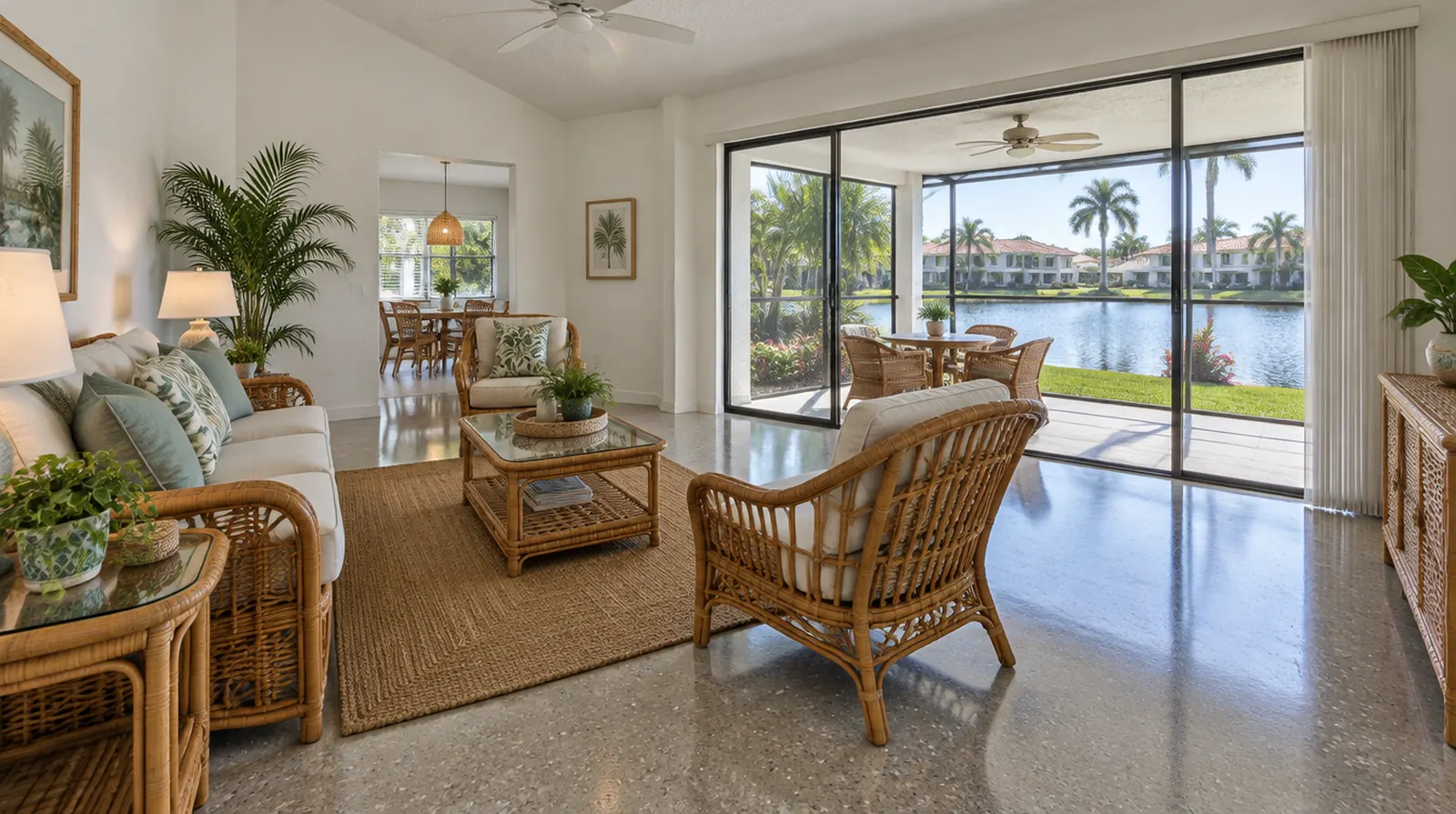
Finding the slab underneath
Many remodels here start with tearing out old flooring. Carpet comes up with tack strips and pad. Tile comes up with thinset and broken grout. Vinyl leaves sticky adhesive behind. Underneath, there is almost always a concrete slab. With the right preparation, that slab can become the finished floor. Polished concrete is durable, cool underfoot and easy to maintain, which makes it a practical choice for South Florida living.
How polishing works
Polishing uses heavy machines with diamond tooling in progressively finer grits. The first passes remove adhesives, high spots and surface damage. A chemical densifier is then applied, which reacts with the concrete to harden the surface. Later passes refine the scratch pattern until the floor reaches the sheen you want. A penetrating guard finishes the job, adding stain resistance.
Unlike a coating, polishing does not add a layer on top. The concrete itself becomes the finish, so there is nothing to peel or delaminate.
Choosing the look
Cream finish
A light grind that keeps the smooth cement surface intact, showing little or no aggregate. Good for a soft, uniform appearance.
Salt and pepper
A slightly deeper grind that exposes fine sand and small stones. This is the most popular look for homes.
Exposed aggregate
A deeper grind revealing larger stones. Older slabs sometimes contain shell and coral aggregate that look striking when polished.
Sheen levels
Polish levels range from matte through satin to high gloss. Satin is common in homes because it hides footprints and dust better. Higher gloss suits retail spaces and darker rooms where reflected light helps.
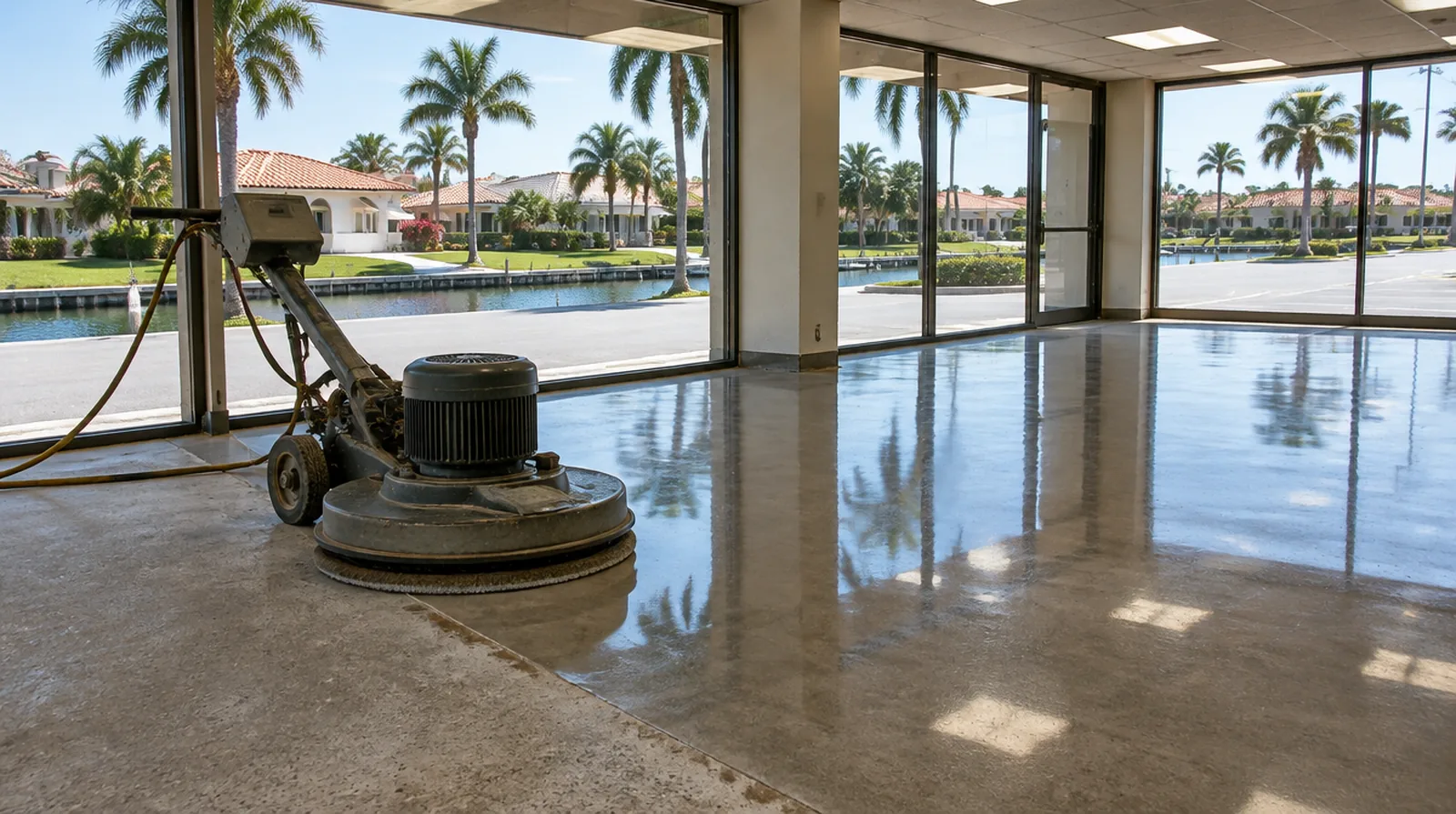
Dealing with patches and stains
Old slabs show their history: plumbing trenches patched during remodels, outlines where walls once stood, tack strip holes along the edges and stains from pets or spilled paint. Some people love that character. Others prefer a more even look. We can fill holes with color-matched filler, and tinted dyes help blend patches and stains. We polish a test area first so you can see how your slab responds before committing.
Moisture and breathability
Because polished concrete has no film on top, it handles moisture rising through older slabs better than most coatings. That makes it a good option for homes where moisture tests rule out a full epoxy system.
Commercial polishing
Retail stores, medical offices and warehouse spaces benefit from polished concrete because it stands up to traffic and needs only routine cleaning. There is no waxing or stripping. We can work after hours to keep businesses open.
Care
Dust mop regularly and damp mop with a pH-neutral cleaner. Wipe up acidic spills such as citrus juice, wine and vinegar promptly. A periodic burnish restores gloss in busy areas, and the guard can be renewed as needed.
Questions
Is polished concrete cold or hard on feet?
It stays cool, which most people here appreciate. Area rugs add softness where you stand often.
Can every slab be polished?
Most can. Badly damaged or very soft concrete may be better suited to a coating. A test area tells us.
How long does it take?
A typical living area takes two to four days, depending on adhesive removal and the finish level.
Schedule a test polish
Contact us to have your slab evaluated, or explore metallic epoxy for a bolder finish.
Polishing with furniture and cabinets in place
Many homeowners polish during a remodel, before new cabinets go in. If cabinets and built-ins stay, we polish up to them carefully and use handheld tools along the edges. Baseboards are usually removed and reinstalled after the work. Dust is controlled with vacuums throughout, and we wet-clean the floor at the end so the room is ready for furniture.
Get a polished concrete quote
Call (954) 280-5619 for a free estimate.